Why Should These Ingredients Not Be Mixed in Serums?

Time:2026-09-28 Author:Amelia
0%

Serums can make a routine feel precise: a few drops, a light layer, then moisturizer. But active ingredients do not always behave well when layered. The question “what ingredients should not be mixed in serums” has no universal blacklist. Formula strength, skin sensitivity, and application frequency all matter. Some combinations mainly increase irritation; others can be used together in well-designed products.

The stakes are practical. The American Academy of Dermatology advises introducing one new product at a time, since several new products can make irritation harder to trace. Board-certified dermatologist Dr. Joshua Zeichner has similarly cautioned that “more is not always better” in skincare. Treat that as a useful principle, not a rule that every active ingredient needs separation. For example, combining a retinoid with exfoliating acids may be too harsh for some people, while professionally formulated products may pair actives safely. Stinging is not proof that a serum is working.

The market is expanding, too. Grand View Research estimated the global skincare market at $135.83 billion in 2022 and projected continued growth through 2030. That figure describes commercial scale, not clinical effectiveness. Labels and online routines can make complicated layering look effortless. Real skin can be less predictable. A cautious routine—with clear ingredient lists, gradual changes, and attention to persistent redness or burning—is often more useful than chasing every active at once. This guide examines common conflicts, what the evidence supports, and where blanket advice falls short.
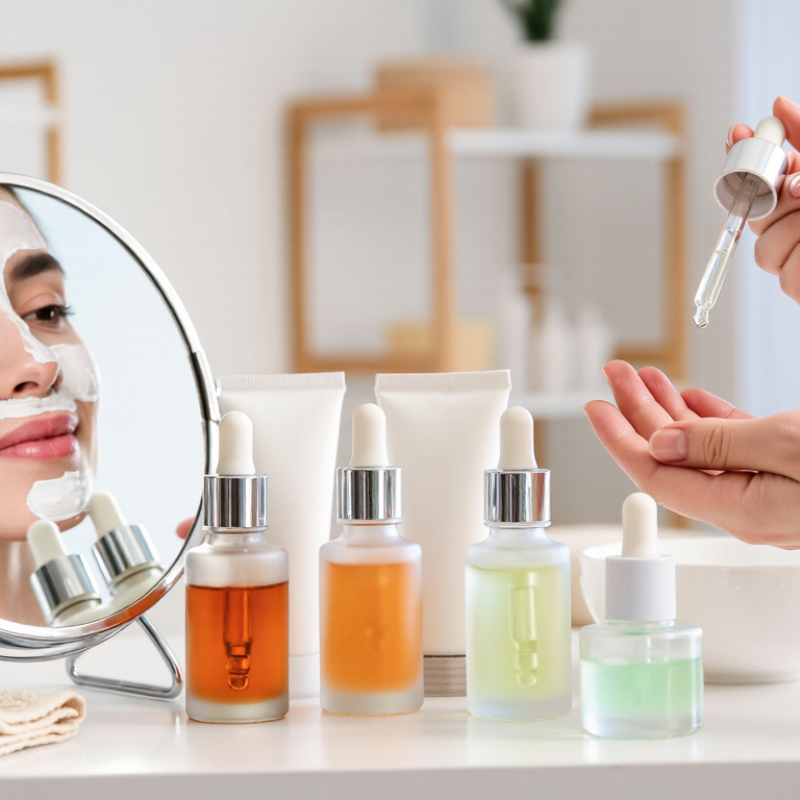
Why Should These Ingredients Not Be Mixed in Serums?

What Serum Ingredients Do and How They Interact

A serum is not just a list of actives. Its water or oil base, pH, concentration, and packaging all affect how ingredients dissolve and reach the skin. When two formulas are layered, they may increase irritation without chemically “canceling” each other. For example, retinoids and exfoliating acids can both cause dryness or redness, especially on sensitive skin. Context matters. A low-pH vitamin C formula may also behave differently from a stable derivative; the ingredient name alone cannot predict compatibility.

Professional assessments offer useful boundaries, not universal mixing rules. The Cosmetic Ingredient Review Expert Panel’s assessment of alpha hydroxy acids supported consumer products with glycolic or lactic acid at up to 10% and pH 3.5 or higher, alongside sun-protection guidance. The EU Scientific Committee on Consumer Safety’s 2022 vitamin A opinion considered retinol-equivalent concentrations up to 0.3% in other leave-on products, including facial products. These figures assess ingredient safety under specified conditions; they do not prove that combining products is safe for every person. In practice, introduce one active at a time, check the product directions, and watch for persistent stinging or flaking. I still find ingredient lists easy to overread: two familiar names do not reveal a formula’s pH, stability, or strength.

How pH and Formulation Affect Ingredient Compatibility

Serum compatibility is not a simple blacklist of ingredients. The pH of a water-based formula can affect an ingredient’s ionization, solubility, and stability. Pure L-ascorbic acid, for example, is usually formulated at a low pH; a higher-pH environment may change how it behaves. That does not mean every higher-pH serum “cancels” it. Skin and formulas are more complicated. Small details matter.

Formulation matters just as much as pH. Buffers help keep a product within a chosen pH range, while solvents, thickeners, and encapsulation can influence how ingredients remain dispersed or are released. Mixing two serums in your palm can dilute those carefully balanced systems.

Layering them is different, though irritation may still occur when several potent products are used together. The awkward part: a product label rarely tells the whole formulation story.

Introduce one new serum at a time, follow its directions, and watch for persistent redness or stinging. A patch test can help, but it cannot predict every reaction.

Which Active Ingredients May Conflict When Combined

Why Should These Ingredients Not Be Mixed in Serums?

Some active ingredients can irritate skin when layered, even if each works well alone. Retinoids and exfoliating acids, such as glycolic or salicylic acid, may cause dryness, redness, or peeling when used together. The risk rises if you apply them often or already have sensitive skin. That can sting.

Benzoyl peroxide may reduce the effectiveness of certain retinoids when applied at the same time. However, compatibility depends on the specific formulas; some products are designed to be used together. Check product directions rather than relying on a blanket rule. Vitamin C and niacinamide are often described as a bad pairing, but modern formulas can generally be used together. Irritation or pilling may still happen, especially when several products are layered.

A simpler routine can make reactions easier to trace. Use an exfoliating acid on one evening and a retinoid on another, then moisturize. Patch-test new products on a small area and introduce one active at a time. I find the tricky part is that skin does not react like a chart: weather, frequency, and barrier health matter. If burning or persistent redness develops, pause the active products and seek advice from a qualified skin professional. Some combinations may be tolerable, but tolerable is not always useful.

Why Some Active Ingredients Shouldn’t Be Mixed in Serums

Potential formulation or irritation concerns vary by ingredient, product, and routine.

Qualitative scale: 0 = no established incompatibility; 1 = formulation-dependent or limited evidence; 2 = notable irritation or stability concern; 3 = established stability concern with some conventional formulations. These are not clinical risk measurements. Benzoyl peroxide can degrade conventional tretinoin, while combining exfoliating acids with retinoids may increase irritation. Product formulation matters, and using actives at different times can help.

What Risks Can Incompatible Serum Combinations Create

Serum combinations can create more than temporary redness. Retinoids, exfoliating acids such as glycolic acid, and salicylic acid may all increase irritation when layered in one routine. Skin can feel tight, sting when water touches it, or develop flaky patches around the nose and mouth. The risk rises when products are strong, used often, or applied to already irritated skin. More is not always better.

Some ingredients may also affect product stability. For example, benzoyl peroxide can reduce the effectiveness of certain retinoids or vitamin C formulas, though the outcome depends on the specific ingredients and formulation. A serum’s texture or pH alone cannot reliably show whether it will mix well with another product. That uncertainty matters. Irritation and reduced performance are not the same problem, but either can make a routine less useful.

It is tempting to blame every reaction on a “bad” ingredient pair. In reality, concentration, frequency, and individual sensitivity matter too. A patch test may reveal irritation, but it cannot guarantee that repeated use will be comfortable. Introduce one active product at a time, and avoid applying several potent formulas to damp, freshly cleansed skin if they tend to sting. Stop using products that cause persistent burning, swelling, or worsening rash, and seek medical advice for severe or ongoing symptoms.

How to Layer Serums More Safely

How to Layer Serums More Safely

Read the active ingredients, not just the front labels. Two products may look different but both contain exfoliating acids or retinoids. Using them together can increase dryness, redness, or stinging. A 2019 international study by Misery and colleagues reported sensitive skin in 60–70% of women and 50–60% of men. Those figures do not prove that layering causes irritation, but they support a cautious approach. Skin varies.

Keep the routine simple. Apply a lightweight, water-based serum first, then a thicker moisturizer. In the morning, finish with broad-spectrum sunscreen. Introduce one active ingredient at a time, using it on a small area before applying it widely. Give your skin several days to respond. It is tempting to add one more serum. That can be too much.

Avoid using multiple strong actives in one routine, especially if your skin already feels tight or looks flaky. For example, try an exfoliating acid on one evening and a retinoid on another, rather than combining them immediately. The U.S. FDA’s guidance on alpha hydroxy acids notes that they may increase sun sensitivity during use and for a week afterward. Sunscreen matters. If irritation persists, stop the new product and seek advice from a qualified dermatologist; guessing is not always helpful.

FAQS

Can I combine retinoids and exfoliating acids?

Combining them may increase dryness, redness, or stinging. Try them on separate evenings instead. Skin varies.

What signs suggest my routine is too irritating?

Watch for tightness, stinging when water touches your face, or flaky patches near your nose and mouth. Stop products causing persistent burning or swelling, and seek medical advice.

Does a patch test guarantee a serum is safe for regular use?

No. A small-area test may reveal irritation, but repeated use can still cause discomfort. A calm first test is not a guarantee.

How should I introduce a new active serum?

Add one active product at a time. Test a small area, then give your skin several days to respond. Avoid applying it to damp, freshly cleansed skin if it tends to sting.

What order should I apply serum and moisturizer?

Apply a lightweight, water-based serum before a thicker moisturizer. In the morning, finish with broad-spectrum sunscreen. Keep it simple.

Can benzoyl peroxide affect other formulas?

It may reduce the effectiveness of certain retinoids or vitamin C formulas. Results depend on the ingredients and formulation, so texture or pH alone cannot predict compatibility.

Do exfoliating acids make sun protection more important?

Alpha hydroxy acids may increase sun sensitivity during use and for a week afterward. Use broad-spectrum sunscreen. This detail is easy to overlook.

What should I do if my skin keeps reacting?

Stop the new product if irritation persists, and ask a qualified dermatologist for advice. Concentration, frequency, and personal sensitivity may all matter; blaming one ingredient pair may be too simple.

Conclusion

Serums combine concentrated active ingredients, but their effectiveness depends on how those ingredients interact and on the product’s pH and formulation. Asking what ingredients should not be mixed in serums has no single answer for every formula: certain combinations, such as strong exfoliating acids with retinoids or multiple potent actives used at once, may increase irritation or make a routine harder to tolerate. Differences in pH can also affect stability or performance, while texture and formulation influence how products sit and layer on the skin.

Incompatible or excessive combinations may contribute to dryness, redness, stinging, or sensitivity. To layer serums more safely, introduce one active at a time, follow product directions, and consider applying products at different times of day rather than stacking them. Patch testing and choosing a simpler routine can help identify what your skin tolerates. If irritation persists, stop using the products and seek advice from a qualified skincare professional.

Amelia

Amelia

Amelia is a seasoned marketing professional with a wealth of expertise in our company’s core offerings. With an unwavering passion for driving growth and innovation, she plays a pivotal role in shaping our marketing strategies and enhancing brand visibility. A key aspect of her responsibilities......