Facial serum is often treated like a small luxury, yet its performance depends heavily on storage. Learning how to store facial serum properly can help protect its texture, color, scent, and active ingredients. The U.S. Food and Drug Administration explains that cosmetic products generally do not require expiration dates, but manufacturers remain responsible for product safety. That distinction matters. A bottle may look acceptable while its formula slowly loses stability.
Industry research also shows why this topic deserves attention. Grand View Research valued the global skincare products market at approximately USD 146 billion in 2021 and expects continued growth through 2030. More products in homes mean more opened bottles, bathroom humidity, and inconsistent routines. The ISO 22716 Good Manufacturing Practices standard highlights controlled storage, handling, and contamination prevention across cosmetic production. Those principles remain useful after purchase, even though home conditions are less controlled.
A practical routine starts with the label. Keep serum tightly closed, away from direct sunlight, radiators, and steamy showers. A cool drawer is usually safer than a bright windowsill. Refrigeration is not automatically better; some formulas may change texture or become uncomfortable on the skin. Airless pumps can reduce repeated air exposure, while droppers require cleaner handling. Do not touch the dropper to your face.
Small mistakes matter.
Check changes in smell, color, separation, or viscosity before applying. The PAO symbol, such as “6M” or “12M,” indicates recommended use after opening, not a guaranteed promise. Preservatives can weaken over time, especially when water enters the container. This guidance is practical, but not perfect. Formula type, packaging, climate, and opening habits all influence real shelf life. When doubt remains, replacing the serum is the more reliable choice.
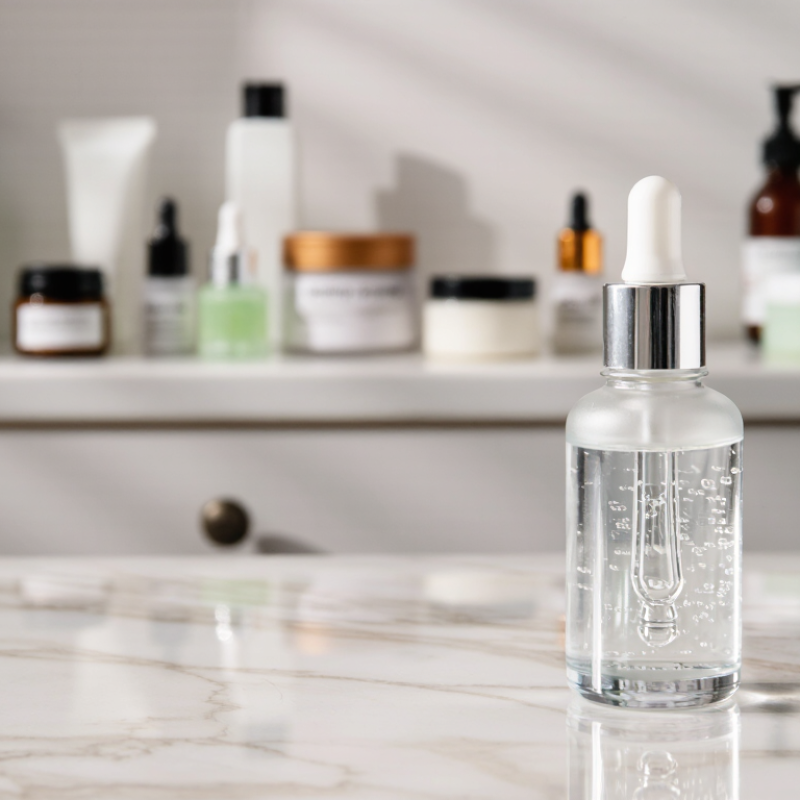
Understanding Facial Serum Stability and Shelf Life
Facial serum stability depends on more than its printed expiration date. Water, oxygen, light, heat, and repeated contact can slowly change its formula. Vitamin C, retinoids, botanical extracts, and water-based formulas may be especially sensitive. Their color, scent, texture, or performance can shift before the product looks obviously spoiled. Easy to miss. A stated shelf life usually reflects laboratory stability testing under controlled conditions, not every bathroom environment.
Store the bottle in a cool, dry drawer, away from windows, radiators, and steamy bathrooms. Stable room temperature is usually safer than refrigeration, unless the label recommends chilling. Cold can thicken some serums and create condensation when the bottle warms. Keep the cap tightly closed, and avoid touching the dropper or pump opening. Clean hands help, but they do not replace the product’s preservative system. Use the original container because it limits light and air exposure.
I once left a serum beside a sunny sink and noticed a darker tint weeks later. I could not prove sunlight caused every change, but the storage choice was poor. Check the expiration date and any period-after-opening symbol. Record the opening date with a small piece of tape. Discard the serum if it develops an unusual odor, separation, unexpected grains, or persistent irritation. Do not rely on smell alone; some stability problems are invisible. When uncertain, ask a pharmacist or qualified cosmetic professional to review the ingredients and storage conditions.
How to Store Facial Serum Properly for Longer Shelf Life?
Understanding facial serum stability and shelf life begins with controlling heat, light, air, and moisture. The chart below uses a Q10 model in which the reaction rate approximately doubles for every 10°C increase. Values are normalized to 25°C and are not a product-specific expiry prediction.
Practical guidance: Store facial serum in a cool, dry, dark place, keep the container tightly closed, avoid repeated exposure to heat and sunlight, and follow the storage instructions and period-after-opening symbol on the product. Do not freeze the serum unless the manufacturer specifically recommends it.
Choosing the Best Storage Location and Temperature
Facial serum lasts longer when stored in a cool, dark, stable location. A bedroom drawer or closed cabinet usually works better than a bathroom shelf. Daily showers create heat and humidity, which may accelerate oxidation and weaken sensitive ingredients. Keep the bottle away from windows, radiators, and warm appliances. Direct sunlight can also warm the container repeatedly, even when the room feels comfortable.
A practical target is 15–25°C, but this is not a universal guarantee. ISO 22716:2007 states that cosmetic storage conditions should protect product quality and follow documented product data. The ICH Q1A(R2) stability guideline uses 25°C/60% relative humidity for long-term testing and 40°C/75% humidity for accelerated testing. These pharmaceutical benchmarks are useful warnings, not promises for every serum.
Avoid freezing, because ice crystals can disturb emulsions and change texture. Refrigeration is acceptable only when the product instructions permit it. Some formulas become thick, cloudy, or difficult to spread when chilled.
I once kept a serum beside a sunny mirror. Bad choice. The liquid looked normal, but appearance cannot prove ingredient stability. Store it upright and tighten the cap after every use. Smaller containers often expose less formula to air during daily handling. Pump packaging can also reduce contamination compared with repeatedly touching an open jar. Check the smell, color, and texture regularly, but do not rely on these signs alone. My storage routine is not perfect, especially during summer travel. A small thermometer near the cabinet can reveal temperature swings that guesswork misses.
Protecting Serum from Light, Air, Heat, and Moisture
Facial serum can lose quality when light, air, heat, or moisture reaches it repeatedly. These factors may accelerate oxidation and weaken sensitive ingredients. Store the bottle in a cool, dark cabinet away from direct sunlight. A closed drawer works well. Use the original container whenever possible, especially if it is opaque or airless. Transparent bottles need extra protection. If the label gives different storage instructions, follow those directions carefully.
Air enters whenever the cap stays open. Close it firmly after each use, and avoid touching the dropper tip to your skin or fingers. That simple habit helps reduce contamination. Do not leave the bottle uncapped while applying makeup. I once kept a serum beside a bright window because it was convenient. Its color changed sooner than expected, and I had ignored the obvious warning. Convenience is not always harmless.
Heat speeds up ingredient breakdown, so keep serum away from radiators, hot shelves, and sunny windowsills. The bathroom may seem practical, but showers create warmth and moisture. A dry bedroom cabinet is usually safer. Wipe the bottle before replacing it if water collects around the cap. Check for changes in smell, color, texture, or separation. A slight difference may be normal, but a sharp change deserves caution. Discard any product that seems clearly altered, even when its printed date has not passed.
Using Clean Handling Practices to Prevent Contamination
Serum storage begins with clean hands, a dry counter, and a cap that never touches the sink. Wash your hands before opening the container. Dry them completely. Water can dilute the formula or introduce microbes around the opening. Use the dropper or pump without touching your face, skin, or countertop. Avoid placing the applicator on a towel. Towels may look clean but often hold invisible residue.
After each use, wipe the bottle neck with a fresh, dry tissue. Do not rinse it. Rinsing can leave moisture behind. If the bottle has a pipette, keep it inside the container only briefly. Close the cap firmly after dispensing. A loose cap allows air, dust, and humidity to enter. Store the serum according to its label, away from direct sunlight and heaters. Heat can weaken sensitive ingredients. A cool drawer is often safer than a steamy bathroom shelf.
Check the texture, color, and smell regularly. An unusual change deserves caution. Do not test questionable serum on your face. I once treated a sticky cap as harmless, but it showed that my cleaning routine was inconsistent. Small oversights matter. The printed expiration date and period-after-opening guidance should guide replacement decisions. Product stability depends on the formula, packaging, and handling conditions. Even excellent preservatives cannot correct repeated contamination.
Recognizing When Facial Serum Should Be Replaced
Facial serum can lose quality before it looks completely spoiled. Check the expiration date and the period-after-opening symbol on the package. Record the opening date on a small label. This simple habit makes replacement decisions less uncertain. Most formulas should stay away from direct sunlight, humid bathrooms, and hot windowsills. A cool, dry drawer is usually safer.
Watch for changes in color, smell, and texture. A serum that turns darker, develops a sour odor, or separates unusually may no longer be reliable. Gritty particles, a sticky film, or a watery layer also deserve attention. Do not test questionable product on your whole face. Apply nothing suspicious near your eyes. Trust your skin.
I once kept a nearly full serum because it seemed wasteful. The texture later became thinner, and my cheeks felt unusually tight after application. That experience reminded me that appearance alone is not enough. Stop using the serum if burning, persistent redness, itching, or swelling develops. Rinse the area gently and seek professional medical advice if symptoms continue. Replace products sooner when the pump or dropper touches skin repeatedly, since contamination can enter the bottle. Even with careful storage, an opened serum past its recommended use period should be discarded. I am not always perfect with dates, but a calendar reminder helps.
How to Store Facial Serum Properly for Longer Shelf Life? - Recognizing When Facial Serum Should Be Replaced
| Storage or Replacement Factor |
Recommended Practice |
Why It Matters |
When to Replace the Serum |
| Temperature |
Keep the bottle in a cool, stable indoor location and follow the storage directions on the package. |
Heat can accelerate ingredient degradation and may change the serum’s texture or effectiveness. |
Replace it if repeated heat exposure is followed by a noticeable change in color, odor, texture, or performance. |
| Light exposure |
Store the serum away from direct sunlight and strong artificial light, preferably in a closed cabinet. |
Light can promote oxidation and reduce the stability of light-sensitive cosmetic ingredients. |
Discard the product if its color becomes substantially darker or different from its original appearance. |
| Bathroom humidity |
Avoid leaving the bottle beside a shower, sink, or other area with frequent steam and moisture. |
High humidity and frequent temperature changes can affect packaging and increase contamination risk. |
Replace it if the formula develops an unusual smell, visible growth, or a persistent watery or lumpy texture. |
| Container closure |
Close the cap or pump immediately after each use and check that the closure is secure. |
A tight closure limits air, moisture, and microorganisms from entering the product. |
Replace it if the cap is damaged, the pump stops sealing, or the bottle has been left open for an extended period. |
| Handling and hygiene |
Use clean, dry hands and avoid touching the dropper or applicator directly to the skin. |
Reducing contact with skin and surfaces helps minimize microbial contamination. |
Discard the serum if it causes an unexpected reaction or appears contaminated after poor handling. |
| Opening date |
Write the opening date on the package and check the period-after-opening symbol, if provided. |
The period-after-opening symbol indicates the manufacturer’s recommended usable period after first opening. |
Replace the product when the stated period after opening has passed, even if some serum remains. |
| Expiration or best-before date |
Record the printed date and follow the product’s label instructions, especially after opening. |
Cosmetic preservatives and active ingredients may not remain reliable indefinitely. |
Do not use the serum beyond its labeled expiration or best-before date. |
| Color change |
Compare the product with its original color when it is first opened. |
A significant color shift may indicate oxidation, ingredient breakdown, or contamination. |
Replace it when the color changes substantially or becomes cloudy without being designed that way. |
| Odor change |
Notice the original scent or odor at first use for future comparison. |
A sour, rancid, metallic, or otherwise unusual odor can signal formula deterioration. |
Stop using and replace the serum if its smell changes noticeably. |
| Texture and separation |
Observe whether the serum remains uniform and matches its original consistency. |
Persistent separation, clumping, crystallization, or unusual thickness may indicate instability. |
Replace it if gentle shaking does not restore the original texture or if particles appear unexpectedly. |
| Skin response |
Patch-test a questionable product and stop use if irritation develops. |
A change in formula stability or contamination may increase the risk of irritation. |
Replace it if it repeatedly causes burning, itching, redness, swelling, or a new rash. |
Safety note: Always prioritize the product label and discard facial serum if its appearance, odor, texture, or skin response changes unexpectedly. Do not use a product that is past its expiration date or stated period after opening.
Conclusion
Learning how to store facial serum properly can help preserve its texture, effectiveness, and overall quality for a longer period. Serum stability depends on its ingredients, packaging, and exposure to environmental conditions. Store it in a cool, dry place away from direct sunlight, radiators, and areas with frequent temperature changes. A consistent room temperature is usually suitable, while excessive heat or humidity may reduce product quality. Keep the container tightly closed to limit contact with air, and avoid storing it in damp places where moisture can encourage contamination.
Clean handling is equally important. Wash and dry your hands before use, avoid touching the dropper or nozzle to your skin, and never add water or other products to the serum. Pay attention to changes in color, smell, texture, or separation, as these may indicate that the serum should be replaced. Always follow the product’s recommended usage period after opening, even if the serum appears normal, and dispose of it when its condition becomes questionable.
 Tsuya Beauty
